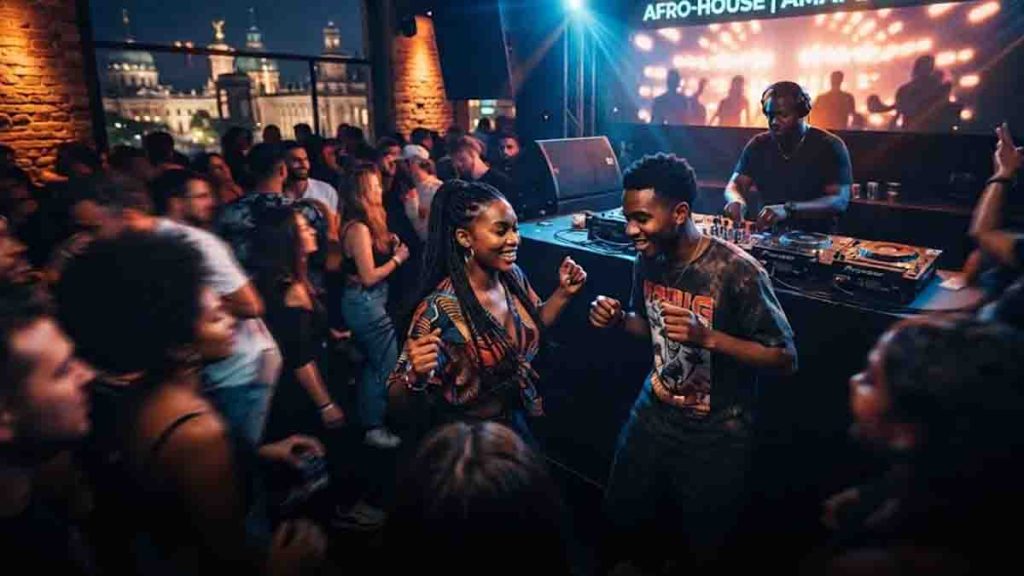
European nightlife has undergone a seismic shift over recent years. Once dominated strictly by the rigid, monotonous four-on-the-floor beats of Berlin techno and minimal house, modern European club culture is now pulsating with the rich, organic, and polyrhythmic sounds of Africa.
From the soulful, hypnotic grooves of Afro-house to the low-end log drums of South African Amapiano, African electronic music has moved out of niche diaspora events and straight into the main rooms of Ibiza mega-clubs, London warehouses, and Berlin festivals.
This cultural migration is built on a deep exchange between African producers and European promoters, collectives, and tastemakers. Crews like Berlin’s Freak de l’Afrique and international artist collectives like Keinemusik have championed these sounds, transforming them into global phenomena.
Rather than treating African rhythms as a passing trend, European dancefloors have embraced them as a vital evolution of club music. The human element—complex percussion, ancestral grooves, and community-driven energy—offers a refreshing antidote to sterile digital production.
Platforms like TikTok and digital record pools have accelerated this momentum, allowing tracks from Johannesburg and Lagos to land directly in the hands of European club DJs within hours of release. Residencies by pioneers like Black Coffee in Ibiza have further cemented these genres into the elite tier of international nightlife.
Ultimately, African dance music didn’t just find a new home in Europe; it revitalized the continent’s entire club ecosystem, proving that the future of global nightlife lies in rhythm, inclusivity, and cross-continental collaboration.